A simple list of objects of type <T> that is intended to be used as a circular buffer (eg, a FIFO) when the alloc/free overhead associated with a linked-list approach is to be avoided. More...
#include <CircularBuffer.H>
Classes | |
| class | const_iterator |
| A simple forward const iterator for a circular buffer. More... | |
Public Types | |
| typedef T | value_type |
| The value type the list contains. | |
| typedef T * | pointer |
| The pointer type for non-const access to value_type items. | |
| typedef const T * | const_pointer |
| The pointer type for const access to value_type items. | |
| typedef T & | reference |
| The type used for storing into value_type objects. | |
| typedef const T & | const_reference |
| The type used for reading from constant value_type objects. | |
| typedef label | size_type |
| The type to represent the size of a buffer. | |
| typedef label | difference_type |
| The difference between iterator objects. | |
Public Member Functions | |
| constexpr | CircularBuffer () noexcept |
| Default construct, empty buffer without allocation. | |
| CircularBuffer (const label len) | |
| Construct an empty buffer with given reserve size. | |
| CircularBuffer (const CircularBuffer< T > &list) | |
| Copy construct. | |
| CircularBuffer (CircularBuffer< T > &&list) | |
| Move construct. | |
| CircularBuffer (Istream &is) | |
| Construct from Istream - uses readList. | |
| label | capacity () const noexcept |
| Size of the underlying storage. | |
| bool | empty () const noexcept |
| Empty or exhausted buffer. | |
| label | size () const noexcept |
| The current number of buffer items. | |
| label | space () const noexcept |
| The nominal space available to fill. Subtract 1 for the number to append before re-balancing is needed. | |
| labelRange | range_one () const noexcept |
| The addressing range covered by array_one(). | |
| labelRange | range_two () const noexcept |
| The addressing range covered by array_two(). | |
| SubList< T > | array_one () |
| The contents of the first internal array. | |
| SubList< T > | array_two () |
| The contents of the second internal array. | |
| const SubList< T > | array_one () const |
| The contents of the first internal array. | |
| const SubList< T > | array_two () const |
| The contents of the second internal array. | |
| T & | front () |
| Access the first element (front). Requires !empty(). | |
| T & | back () |
| Access the last element (back). Requires !empty(). | |
| const T & | front () const |
| Const access to the first element (front). Requires !empty(). | |
| const T & | back () const |
| Const access to the last element (back). Requires !empty(). | |
| void | reserve (const label len) |
| Reserve allocation space for at least this size, allocating new space if required and retaining old content. | |
| void | reserve_nocopy (const label len) |
| Reserve allocation space for at least this size, allocating new space if required without retaining old content. | |
| void | clear () noexcept |
| Clear the addressed buffer, does not change allocation. | |
| void | clearStorage () |
| Clear the buffer and delete storage. | |
| void | swap (CircularBuffer< T > &other) |
| Swap content, independent of sizing parameter. | |
| bool | contains (const T &val) const |
| True if the value is contained in the list. | |
| bool | contains (const T &val, label pos) const |
| Is the value contained in the list? | |
| label | find (const T &val, label pos=0) const |
| Find index of the first occurrence of the value. | |
| void | push_front (const T &val) |
| Copy prepend an element to the front of the buffer. | |
| void | push_front (T &&val) |
| Move prepend an element to the front of the buffer. | |
| template<class... Args> | |
| T & | emplace_front (Args &&... args) |
| Construct an element at the front of the buffer, return reference to the new element. | |
| void | push_back (const T &val) |
| Copy append an element to the end of the buffer. | |
| void | push_back (T &&val) |
| Move append an element to the end of the buffer. | |
| template<class... Args> | |
| T & | emplace_back (Args &&... args) |
| Construct an element at the end of the buffer, return reference to the new element. | |
| void | pop_front (label n=1) |
| Shrink by moving the front of the buffer 1 or more times. | |
| void | pop_back (label n=1) |
| Shrink by moving the end of the buffer 1 or more times. | |
| void | push_back (const UList< T > &list) |
| Copy append multiple elements the end of the buffer. | |
| template<class Addr> | |
| void | push_back (const IndirectListBase< T, Addr > &list) |
| Copy append IndirectList elements the end of the buffer. | |
| label | push_uniq (const T &val) |
| Append an element if not already in the buffer. | |
| List< T > | list () const |
| Return a copy of the buffer flattened into a single List. Use sparingly! | |
| void | reverse () |
| Reverse the buffer order, swapping elements. | |
| T & | operator[] (const label i) |
| Non-const access to an element in the list. | |
| const T & | operator[] (const label i) const |
| Const access to an element in the list. | |
| void | operator= (const CircularBuffer< T > &list) |
| Copy construct. | |
| void | operator= (CircularBuffer< T > &&list) |
| Move construct. | |
| void | operator= (const T &val) |
| Assign all addressed elements to the given value. | |
| void | operator= (Foam::zero) |
| Assignment of all entries to zero. | |
| void | operator= (const UList< T > &rhs) |
| Deep copy values from a list of the addressed elements. | |
| template<class AnyAddr> | |
| void | operator= (const IndirectListBase< T, AnyAddr > &rhs) |
| Deep copy values from a list of the addressed elements. | |
| Ostream & | info (Ostream &os) const |
| Print information. | |
| Istream & | readList (Istream &is) |
| Read buffer contents from Istream. | |
| Ostream & | writeList (Ostream &os, const label shortLen=0) const |
| Write buffer contents with line-breaks in ASCII when length exceeds shortLen. | |
| const_iterator | cbegin () const |
| Return a const_iterator at begin of buffer. | |
| const_iterator | cend () const |
| Return a const_iterator at end of buffer. | |
| const_iterator | begin () const |
| Return a const_iterator at begin of buffer. | |
| const_iterator | end () const |
| Return a const_iterator at end of buffer. | |
Static Public Member Functions | |
| static constexpr label | min_size () noexcept |
| Lower capacity limit. | |
Friends | |
| Istream & | operator>> (Istream &is, CircularBuffer< T > &list) |
| Use the readList() method to read contents from Istream. | |
| Ostream & | operator<< (Ostream &os, const CircularBuffer< T > &list) |
| Write to Ostream. | |
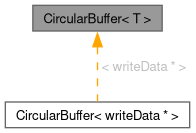
A simple list of objects of type <T> that is intended to be used as a circular buffer (eg, a FIFO) when the alloc/free overhead associated with a linked-list approach is to be avoided.
The internal storage is addressed by independent begin/end markers.
This results in a variety ofr different possible buffer states:
   |.|.|.|a|b|c|d|.|.|.|
   beg ___^
   end ___________^
   |f|g|h|i|.|.|.|a|b|c|d|e|
   end _____^
   beg ___________^
The methods range_one(), range_two() return the internal indexing and the methods array_one(), array_two() provide direct access to the internal contents.
When filling the buffer, the internal storage will be resized (doubling strategy) as required. When this occurs, the new list will be linearized with begin = 0.
Simultaneously when filling, the storage buffer will be over-allocated to avoid ambiguity when (begin == end), which represents an empty buffer and not a full buffer. Eg,
    |c|d|.|a|b|
    end _^
    beg ___^
after appending one more, it would be incorrect to simply fill the available space:
    |c|d|e|a|b|
    end ___^        WRONG : would represent empty!
    beg ___^
the storage is instead increased (doubled) and rebalanced before the append occurs (old capacity 5, new capacity 10):
    |a|b|c|d|e|.|.|.|.|.|
    _^_ beg
    end _______^
Definition at line 115 of file CircularBuffer.H.
| typedef T value_type |
The value type the list contains.
Definition at line 174 of file CircularBuffer.H.
The pointer type for non-const access to value_type items.
Definition at line 179 of file CircularBuffer.H.
| typedef const T* const_pointer |
The pointer type for const access to value_type items.
Definition at line 184 of file CircularBuffer.H.
The type used for storing into value_type objects.
Definition at line 189 of file CircularBuffer.H.
| typedef const T& const_reference |
The type used for reading from constant value_type objects.
Definition at line 194 of file CircularBuffer.H.
The type to represent the size of a buffer.
Definition at line 199 of file CircularBuffer.H.
| typedef label difference_type |
The difference between iterator objects.
Definition at line 204 of file CircularBuffer.H.
|
inlineconstexprnoexcept |
Default construct, empty buffer without allocation.
Definition at line 107 of file CircularBufferI.H.
References Foam::noexcept.
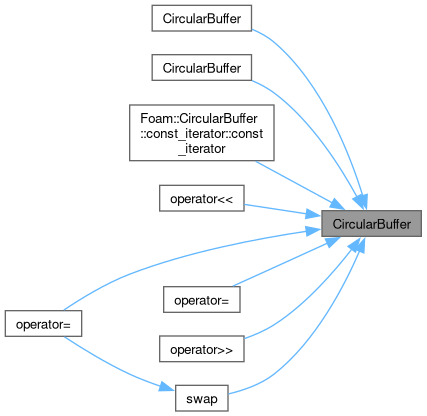
Referenced by CircularBuffer(), CircularBuffer(), CircularBuffer< T >::const_iterator::const_iterator(), operator<<, operator=(), operator=(), operator>>, and swap().
|
inlineexplicit |
Construct an empty buffer with given reserve size.
Definition at line 116 of file CircularBufferI.H.
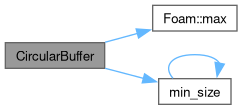
References Foam::max(), and min_size().
Copy construct.
Definition at line 125 of file CircularBufferI.H.
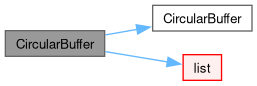
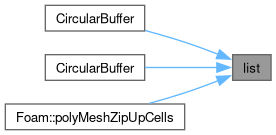
References CircularBuffer(), and list().
Move construct.
Definition at line 137 of file CircularBufferI.H.
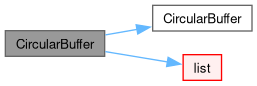
References CircularBuffer(), and list().
Construct from Istream - uses readList.
Definition at line 27 of file CircularBufferIO.C.
References readList().

|
inlinestaticconstexprnoexcept |
Lower capacity limit.
Definition at line 247 of file CircularBuffer.H.
References min_size(), and Foam::noexcept.
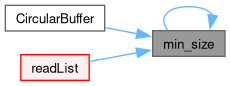
Referenced by CircularBuffer(), min_size(), and readList().

|
inlinenoexcept |
Size of the underlying storage.
Definition at line 154 of file CircularBufferI.H.
References Foam::noexcept.
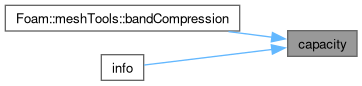
Referenced by Foam::meshTools::bandCompression(), and info().
|
inlinenoexcept |
Empty or exhausted buffer.
Definition at line 162 of file CircularBufferI.H.
References Foam::noexcept.
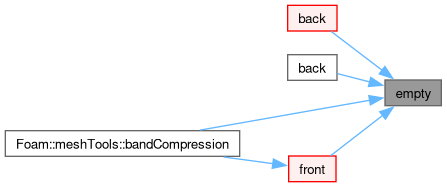
Referenced by back(), back(), Foam::meshTools::bandCompression(), and front().
|
inlinenoexcept |
The current number of buffer items.
Definition at line 169 of file CircularBufferI.H.
References Foam::diff(), and Foam::noexcept.
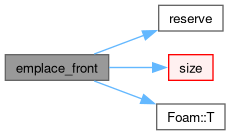
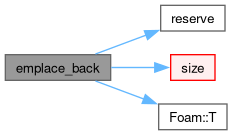
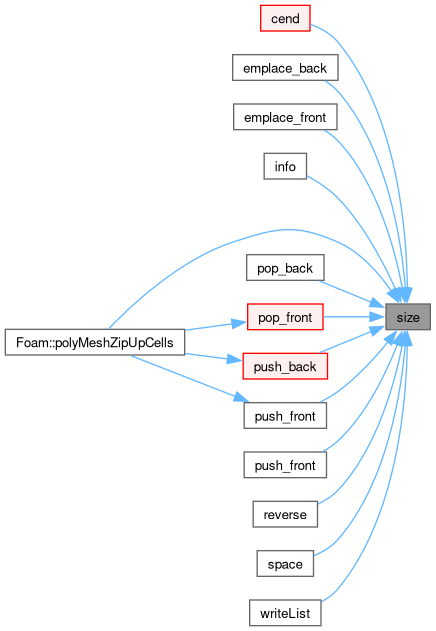
Referenced by cend(), emplace_back(), emplace_front(), info(), Foam::polyMeshZipUpCells(), pop_back(), pop_front(), push_back(), push_front(), push_front(), reverse(), space(), and writeList().

|
inlinenoexcept |
The nominal space available to fill. Subtract 1 for the number to append before re-balancing is needed.
Definition at line 183 of file CircularBufferI.H.
References Foam::noexcept, and size().
|
inlinenoexcept |
The addressing range covered by array_one().
Definition at line 190 of file CircularBufferI.H.
References Foam::noexcept.
|
inlinenoexcept |
The addressing range covered by array_two().
Definition at line 202 of file CircularBufferI.H.
References Foam::noexcept.
| Foam::SubList< T > array_one | ( | ) |
The contents of the first internal array.
Definition at line 77 of file CircularBuffer.C.
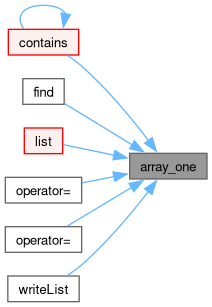
Referenced by contains(), find(), list(), operator=(), operator=(), and writeList().
| Foam::SubList< T > array_two | ( | ) |
The contents of the second internal array.
Definition at line 85 of file CircularBuffer.C.
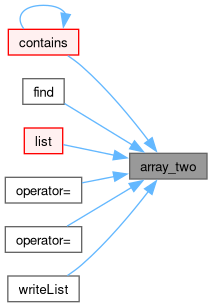
Referenced by contains(), find(), list(), operator=(), operator=(), and writeList().
| const Foam::SubList< T > array_one | ( | ) | const |
The contents of the first internal array.
Definition at line 93 of file CircularBuffer.C.
| const Foam::SubList< T > array_two | ( | ) | const |
The contents of the second internal array.
Definition at line 101 of file CircularBuffer.C.
Access the first element (front). Requires !empty().
Definition at line 267 of file CircularBufferI.H.
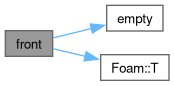
References empty(), and Foam::T().
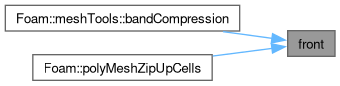
Referenced by Foam::meshTools::bandCompression(), and Foam::polyMeshZipUpCells().
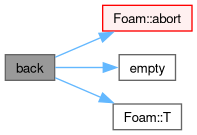
Access the last element (back). Requires !empty().
Definition at line 291 of file CircularBufferI.H.
References Foam::abort(), empty(), Foam::FatalError, FatalErrorInFunction, and Foam::T().
Referenced by Foam::polyMeshZipUpCells().

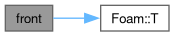
Const access to the first element (front). Requires !empty().
Definition at line 279 of file CircularBufferI.H.
References Foam::T().
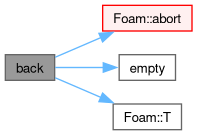
Const access to the last element (back). Requires !empty().
Definition at line 303 of file CircularBufferI.H.
References Foam::abort(), empty(), Foam::FatalError, FatalErrorInFunction, and Foam::T().
|
inline |
Reserve allocation space for at least this size, allocating new space if required and retaining old content.
Never shrinks.
Definition at line 239 of file CircularBufferI.H.
|
inline |
Reserve allocation space for at least this size, allocating new space if required without retaining old content.
Never shrinks.
Definition at line 246 of file CircularBufferI.H.
|
inlinenoexcept |
Clear the addressed buffer, does not change allocation.
Definition at line 209 of file CircularBufferI.H.
References Foam::noexcept.
Referenced by Foam::polyMeshZipUpCells().

|
inline |
Clear the buffer and delete storage.
Definition at line 216 of file CircularBufferI.H.
Referenced by operator=().

|
inline |
Swap content, independent of sizing parameter.
Definition at line 224 of file CircularBufferI.H.
References CircularBuffer().
Referenced by operator=().


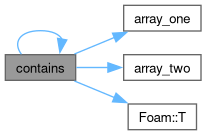
True if the value is contained in the list.
Definition at line 253 of file CircularBufferI.H.
References array_one(), array_two(), contains(), and Foam::T().
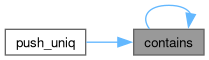
Referenced by contains(), and push_uniq().
Is the value contained in the list?
| val | The value to search for |
| pos | The first position to examine (no-op if -ve) |
Definition at line 260 of file CircularBufferI.H.
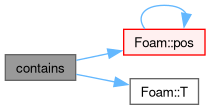
References Foam::pos(), and Foam::T().
Find index of the first occurrence of the value.
Any occurrences before the start pos are ignored. Linear search.
Definition at line 109 of file CircularBuffer.C.
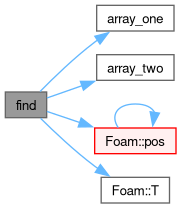
References array_one(), array_two(), Foam::pos(), and Foam::T().
Copy prepend an element to the front of the buffer.
Definition at line 315 of file CircularBufferI.H.
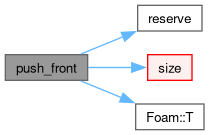
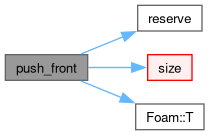
References reserve(), size(), and Foam::T().
Referenced by Foam::polyMeshZipUpCells().

Move prepend an element to the front of the buffer.
Definition at line 327 of file CircularBufferI.H.
References reserve(), size(), and Foam::T().
Copy append an element to the end of the buffer.
Definition at line 354 of file CircularBufferI.H.
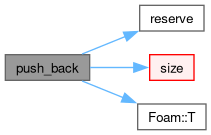
References reserve(), size(), and Foam::T().
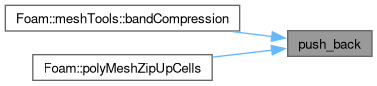
Referenced by Foam::meshTools::bandCompression(), and Foam::polyMeshZipUpCells().
Move append an element to the end of the buffer.
Definition at line 366 of file CircularBufferI.H.
|
inline |
Shrink by moving the front of the buffer 1 or more times.
Definition at line 394 of file CircularBufferI.H.
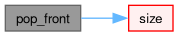
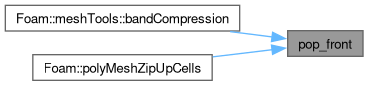
Referenced by Foam::meshTools::bandCompression(), and Foam::polyMeshZipUpCells().
|
inline |
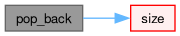
Shrink by moving the end of the buffer 1 or more times.
Definition at line 411 of file CircularBufferI.H.
Copy append multiple elements the end of the buffer.
Definition at line 443 of file CircularBufferI.H.
References Foam::rhs().

|
inline |
Copy append IndirectList elements the end of the buffer.
Definition at line 464 of file CircularBufferI.H.
References Foam::rhs().

Append an element if not already in the buffer.
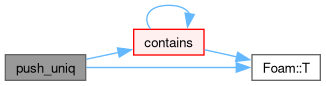
Definition at line 428 of file CircularBufferI.H.
References contains(), and Foam::T().
| Foam::List< T > list | ( | ) | const |
Return a copy of the buffer flattened into a single List. Use sparingly!
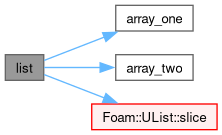
Definition at line 163 of file CircularBuffer.C.
References array_one(), array_two(), and UList< T >::slice().
Referenced by CircularBuffer(), CircularBuffer(), and Foam::polyMeshZipUpCells().
| void reverse | ( | ) |
Reverse the buffer order, swapping elements.
Definition at line 150 of file CircularBuffer.C.
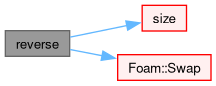
References n, size(), and Foam::Swap().
Non-const access to an element in the list.
The index is allowed to wrap in both directions
Definition at line 489 of file CircularBufferI.H.
References Foam::T().

Const access to an element in the list.
The index is allowed to wrap in both directions
Definition at line 497 of file CircularBufferI.H.
References Foam::T().

|
inline |
Copy construct.
Definition at line 505 of file CircularBufferI.H.
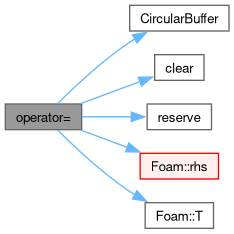
References CircularBuffer(), clear(), reserve(), Foam::rhs(), and Foam::T().
|
inline |
Move construct.
Definition at line 542 of file CircularBufferI.H.
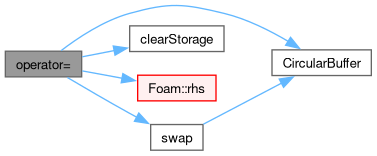
References CircularBuffer(), clearStorage(), Foam::rhs(), and swap().
Assign all addressed elements to the given value.
Definition at line 555 of file CircularBufferI.H.
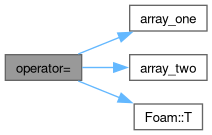
References array_one(), array_two(), and Foam::T().
|
inline |
Assignment of all entries to zero.
Definition at line 563 of file CircularBufferI.H.
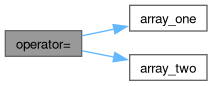
References array_one(), and array_two().
Deep copy values from a list of the addressed elements.
Definition at line 571 of file CircularBufferI.H.
References Foam::rhs().

|
inline |
Deep copy values from a list of the addressed elements.
Definition at line 579 of file CircularBufferI.H.
References Foam::rhs().

| Foam::Ostream & info | ( | Ostream & | os | ) | const |
Print information.
Definition at line 36 of file CircularBufferIO.C.
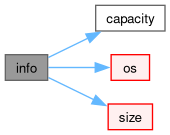
References capacity(), Foam::nl, os(), and size().
| Foam::Istream & readList | ( | Istream & | is | ) |
Read buffer contents from Istream.
Definition at line 50 of file CircularBufferIO.C.
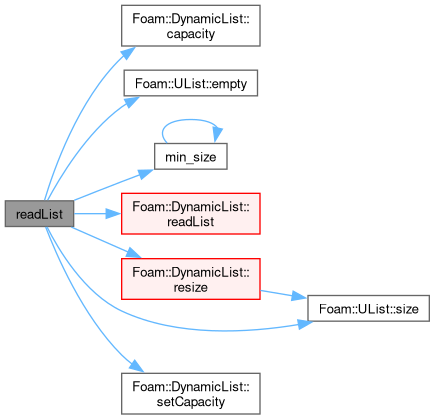
References DynamicList< T, SizeMin >::capacity(), UList< T >::empty(), min_size(), DynamicList< T, SizeMin >::readList(), DynamicList< T, SizeMin >::resize(), DynamicList< T, SizeMin >::setCapacity(), and UList< T >::size().
Referenced by CircularBuffer().

| Foam::Ostream & writeList | ( | Ostream & | os, |
| const label | shortLen = 0 ) const |
Write buffer contents with line-breaks in ASCII when length exceeds shortLen.
Using '0' suppresses line-breaks entirely.
Definition at line 79 of file CircularBufferIO.C.
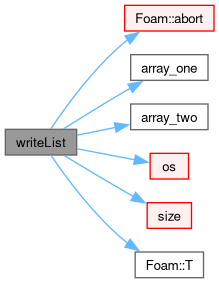
References Foam::abort(), array_one(), array_two(), token::BEGIN_LIST, IOstreamOption::BINARY, token::END_LIST, Foam::FatalError, FatalErrorInFunction, FUNCTION_NAME, Foam::is_contiguous_v, Foam::nl, os(), size(), token::SPACE, and Foam::T().
|
inline |
Return a const_iterator at begin of buffer.
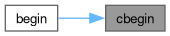
Definition at line 619 of file CircularBuffer.H.
Referenced by begin().
|
inline |
Return a const_iterator at end of buffer.
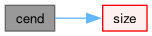
Definition at line 627 of file CircularBuffer.H.
References size().
Referenced by end().

|
inline |
Return a const_iterator at begin of buffer.
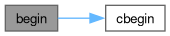
Definition at line 635 of file CircularBuffer.H.
References cbegin().
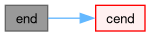
|
inline |
Return a const_iterator at end of buffer.
Definition at line 640 of file CircularBuffer.H.
References cend().
|
friend |
Use the readList() method to read contents from Istream.
Definition at line 650 of file CircularBuffer.H.
References CircularBuffer(), and Foam::rhs().
|
friend |
Write to Ostream.
Definition at line 661 of file CircularBuffer.H.
References CircularBuffer(), os(), and Foam::rhs().
 1.16.1