An opaque wrapper for MPI_Request with a vendor-independent representation without any <mpi.h> header.
More...
#include <UPstream.H>
Public Types | |
| typedef std::intptr_t | value_type |
| Storage for MPI_Request (as integer or pointer). | |
Public Member Functions | |
| Request (const Request &) noexcept=default | |
| Copy construct. | |
| Request (Request &&) noexcept=default | |
| Move construct. | |
| Request & | operator= (const Request &) noexcept=default |
| Copy assignment. | |
| Request & | operator= (Request &&) noexcept=default |
| Move assignment. | |
| bool | operator== (const Request &rhs) const noexcept |
| Test for equality. | |
| bool | operator!= (const Request &rhs) const noexcept |
| Test for inequality. | |
| Request () noexcept | |
| Default construct as MPI_REQUEST_NULL. | |
| Request (const void *p) noexcept | |
| Construct from MPI_Request (as pointer type). | |
| Request (value_type val) noexcept | |
| Construct from MPI_Request (as integer type). | |
| value_type | value () const noexcept |
| Return raw value. | |
| const void * | pointer () const noexcept |
| Return as pointer value. | |
| bool | good () const noexcept |
| True if not equal to MPI_REQUEST_NULL. | |
| void | reset () noexcept |
| Reset to default constructed value (MPI_REQUEST_NULL). | |
| bool | active () const noexcept |
| True if request is active (!= MPI_REQUEST_NULL) Same as good(). Same as calling UPstream::activeRequest(). | |
| bool | finished () |
| Same as calling UPstream::finishedRequest(). | |
| void | wait () |
| Same as calling UPstream::waitRequest(). | |
| void | cancel () |
| Same as calling UPstream::cancelRequest(). | |
| void | free () |
| Same as calling UPstream::freeRequest(). | |
An opaque wrapper for MPI_Request with a vendor-independent representation without any <mpi.h> header.
The MPI standard states that MPI_Request is always an opaque object. Generally it is either an integer (eg, mpich) or a pointer (eg, openmpi).
Definition at line 2918 of file UPstream.H.
| typedef std::intptr_t value_type |
Storage for MPI_Request (as integer or pointer).
Definition at line 2927 of file UPstream.H.
|
defaultnoexcept |
Copy construct.
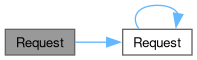
References Request().
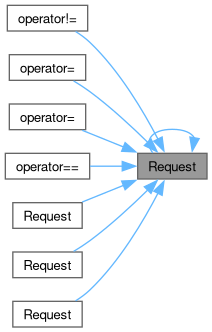
Referenced by operator!=(), operator=(), operator=(), operator==(), Request(), Request(), Request(), and Request().

|
defaultnoexcept |
|
noexcept |
Default construct as MPI_REQUEST_NULL.
Definition at line 25 of file UPstreamRequest.C.
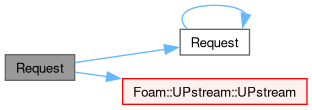
References Foam::noexcept, Request(), and UPstream::UPstream().
|
inlineexplicitnoexcept |
Construct from MPI_Request (as pointer type).
Definition at line 2993 of file UPstream.H.
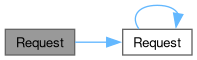
References Foam::noexcept, p, and Request().
|
inlineexplicitnoexcept |
Construct from MPI_Request (as integer type).
Definition at line 3001 of file UPstream.H.
References Foam::noexcept.
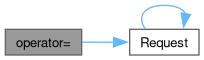
Copy assignment.
References Foam::noexcept, and Request().
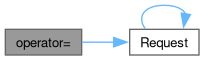
Move assignment.
References Foam::noexcept, and Request().
|
inlinenoexcept |
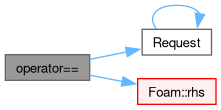
Test for equality.
Definition at line 2969 of file UPstream.H.
References Foam::noexcept, Request(), and Foam::rhs().
|
inlinenoexcept |
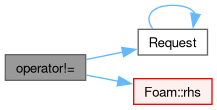
Test for inequality.
Definition at line 2977 of file UPstream.H.
References Request(), and Foam::rhs().
|
inlinenoexcept |
|
inlinenoexcept |
|
noexcept |
True if not equal to MPI_REQUEST_NULL.
Definition at line 33 of file UPstreamRequest.C.
References Foam::noexcept.
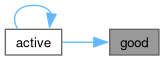
Referenced by active().
|
noexcept |
Reset to default constructed value (MPI_REQUEST_NULL).
Definition at line 39 of file UPstreamRequest.C.
References Foam::noexcept.
|
inlinenoexcept |
True if request is active (!= MPI_REQUEST_NULL) Same as good(). Same as calling UPstream::activeRequest().
Definition at line 3041 of file UPstream.H.
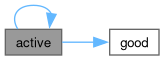
References active(), good(), and Foam::noexcept.
Referenced by active().

|
inline |
Same as calling UPstream::finishedRequest().
Uses MPI_Test()
Definition at line 3048 of file UPstream.H.
References UPstream::finishedRequest().

|
inline |
Same as calling UPstream::waitRequest().
Uses MPI_Wait()
Definition at line 3055 of file UPstream.H.
References UPstream::waitRequest().
Referenced by PPCG::scalarSolveCG().


|
inline |
Same as calling UPstream::cancelRequest().
Uses MPI_Cancel(), MPI_Request_free()
Definition at line 3065 of file UPstream.H.
References UPstream::cancelRequest().

|
inline |
Same as calling UPstream::freeRequest().
Uses MPI_Request_free()
Definition at line 3072 of file UPstream.H.
References UPstream::freeRequest().

 1.16.1